
Biggest beneficiaries would be people having income between 800,001 to 999,999 per annum.

Measures may include tax slab and rate revisions for individuals, companies.
Finance Minister P Chidambaram announced a slew of taxation proposals in the Union Budget on Thursday.

NPS is a cost-effective instrument with low fund management and other fees. Unlike in mutual funds, investors get the benefit of tax-free rebalancing here.

Maintain a proper record of documents that can act as proof of the cost of acquisition of the property, cost of improvements made to the property, expenses related to transfer of the property (like brokerage and registration charges). These will come in handy in case of a dispute with the taxman.

If the shares are purchased for investment, then it would be treated as a capital asset and taxed as capital gains.
But if the shares are bought and sold in a short duration repeatedly, then it would be taxed as business income, explains Amit Gupta.
There are no secrets or mantras to save more tax. Just follow the basics of investing in tax saving instruments and, more importantly, how much one needs to invest.
Here are handful of the number of amendments expected and predicted by analysts in the Union Budget for 2013-2014.
First thing an average citizen thinks about before any Budget is about income tax.

'Increasingly, they treat gold as a financial asset in their portfolio rather than just as jewellery.'

rediffGURU Samkit Maniar answers readers' personal income tax queries
A checklist that will help you save taxes in financial year 2013-14 which begins April 1, 2013 and ends March 31, 2014.
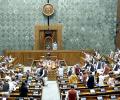
India's opposition parties have sharply criticized the Union Budget, calling it inadequate to address the country's economic woes and accusing the BJP-led government of using it to woo voters in Bihar and Delhi ahead of upcoming elections. Leaders from the Congress, TMC, DMK, SP, and CPI(M) voiced their disapproval, highlighting concerns over inflation, unemployment, and the lack of substantial measures to support the agricultural sector and the poor. They also criticized the tax cuts for the middle class as insufficient and coming too late after years of high taxes and rising prices.

The Rs 84,000 crore domestic fund of funds (FoFs) space, which was in the doldrums over the past 18 months, has now caught the attention of investors due to a change in the tax structure in Budget 2024. The broader category, which includes offerings across equity, debt and commodities, has seen a spike in the inflows over the past two months. FoFs typically deploy the pooled capital in one or multiple MF schemes rather than investing directly into equities, debt or commodities.

Finance Minister Nirmala Sitharaman is likely to step up efforts to boost consumption and rural economy while keeping inflation under check when she presents her sixth straight Budget on February 1. Experts said one way to boost consumption is to put more money in the hands of people, and one of the possible ways of doing it is by reducing the tax burden through tinkering with tax slabs or increasing the standard deduction. Another proposal is related to increasing the funds under the rural employment guarantee scheme MGNREGA and higher payout for farmers.
The Individual tax payer exemption limit to be raised to Rs 200,000 from Rs 180,000.

'Earlier there was no provision for considering TCS collected from the taxpayer for overall tax computation.' 'Now, credit will be given by the employer for TCS already collected to consider net tax to be deductible.'

The Budget has given signals that India is sensitive to the US needs and willing to walk the extra mile, but if need be, we should respond in equal measure as a sovereign nation, notes Ajay Srivastava.

Anticipating US action on tariffs, India seems to have made the first move by revamping its tariff structure by reducing the slabs to eight rates, points out Mukesh Butani.

Ravi Singhal explains how a taxpayer can go about reducing her/his tax liability if they suffer losses while investing or trading in the stock market.

Anil Rego, CEO, Right Horizons, answers your personal income tax queries.

So how do you rate the Modi government's 11th budget?
Six years after the rollout of the biggest indirect tax reform in India, Goods and Services Tax (GST) revenue of Rs 1.5 lakh crore every month has become a new normal and tax officers are focusing on dealing with fraudsters who are adopting newer modus operandi to game the system, causing loss to the exchequer. To apprehend black sheep, who operate as syndicates and create fake entities on the basis of forged documents to claim input tax credit (ITC), tax officers have started using data analytics, artifical intelligence and machine learning aiming to curb evasion, which was over Rs 3 lakh crore since inception of GST. It was over Rs 1 lakh crore in 2022-23. Thinktank Global Trade Research Initiative (GTRI) said the most critical pending GST reform is upgradation of GST Network to prevent fake supplies and fraudulent claims of Input Tax Credit (ITC).

A sharp rise can be attributed to the significant changes in India's share buyback tax regime, which will come into effect from October 1, 2024.
Don't wait till March next year. The new financial year begins April 1, 2014. Some tax-saving tips based on your age group and tax bracket

Otherwise, while filing returns, you may have to pay additional tax.

In an hour-long chat on rediff.com on Wednesday, experts Vinay Mahajan and Devang Mehta offered some valuable tips.
Taxpayers are not likely to get as much relief as was proposed in the discussion paper on the Direct Taxes Code last year, with the Finance Ministry saying that the tax slabs may be narrowed down in the bill, slated to be tabled in the monsoon session of Parliament.
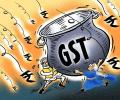
With most states on board to raise revenue so that they do not have to depend on Centre for compensation, the GST Council at its meeting next month is likely to consider a proposal to do away with the 5 per cent slab by moving some goods of mass consumption to 3 per cent and the remaining to 8 per cent categories, sources said. Currently, GST is a four-tier structure of 5, 12, 18 and 28 per cent. Besides, gold and gold jewellery attract 3 per cent tax. In addition, there is an exempt list of items like unbranded and unpacked food items which do not attract the levy.
Recommendations on direct taxes vary from seeking cut in corporate tax, re introduction of standard deduction for salaried employees, removal of STT, DDT, etc.

The government has been trying to make the tax laws simpler every year; however, there are numerous amendments required in the tax laws.
The Individual tax payer exemption limit to be raised to Rs 200,000 from Rs 180,000.

Interest payment on home loans could become fully taxable. Perks to be included in salary income and taxed.

Average monthly GST collection rose from Rs 90,000 crore during the first year of its implementation -- 2017-2018 -- to Rs 1.68 trillion during 2023-2024, representing an 87 per cent rise.
The finance minister's tax giveaways are what have saved tax-payers from the impact of inflation and higher home loan rates.

Mihir Tanna, Associate Director, S K Patodia & Associates, answers your tax queries.
.jpg)
Taxpayer will also have to forego deduction under 80CCC (contribution towards certain pension fund), Section 80D (health insurance), 80E (interest on loan for higher education), 80EE (interest on loan taken for residential property), 80EEB (purchase of electric vehicle), 80G (donation to charitable institutions), and 80G (rent paid).

Opposition MPs in India's Rajya Sabha raised concerns about US President Donald Trump's tariff threats, demanding the government clarify its response and engage in discussions with opposition parties. Leaders like P Chidambaram and Sagarika Ghose warned of potential economic repercussions, including depressed exports, lower FDI, and a significant tariff burden. The debate also touched on other issues such as the government's economic policies, demonetization, and the impact of GST on common citizens.
Corporate tax collections rose by a whopping 166 per cent at Rs 9,079 crore (Rs 90.79 billion) till June 23 of this fiscal against Rs 3,413 crore (Rs 34.13 billion) during the corresponding period of 2004-05.
 © 2026 Rediff.com - Advertise with us - Disclaimer - Privacy Policy - Sitemap - Feedback - About us - Terms of use - Grievances